Best Way to Sell Your Sports Card Collection (Without Getting Ripped Off)
A practical guide to selling your sports card collection, whether it's 50 cards or 50,000. The real options, what each costs you, and how to maximize your return.
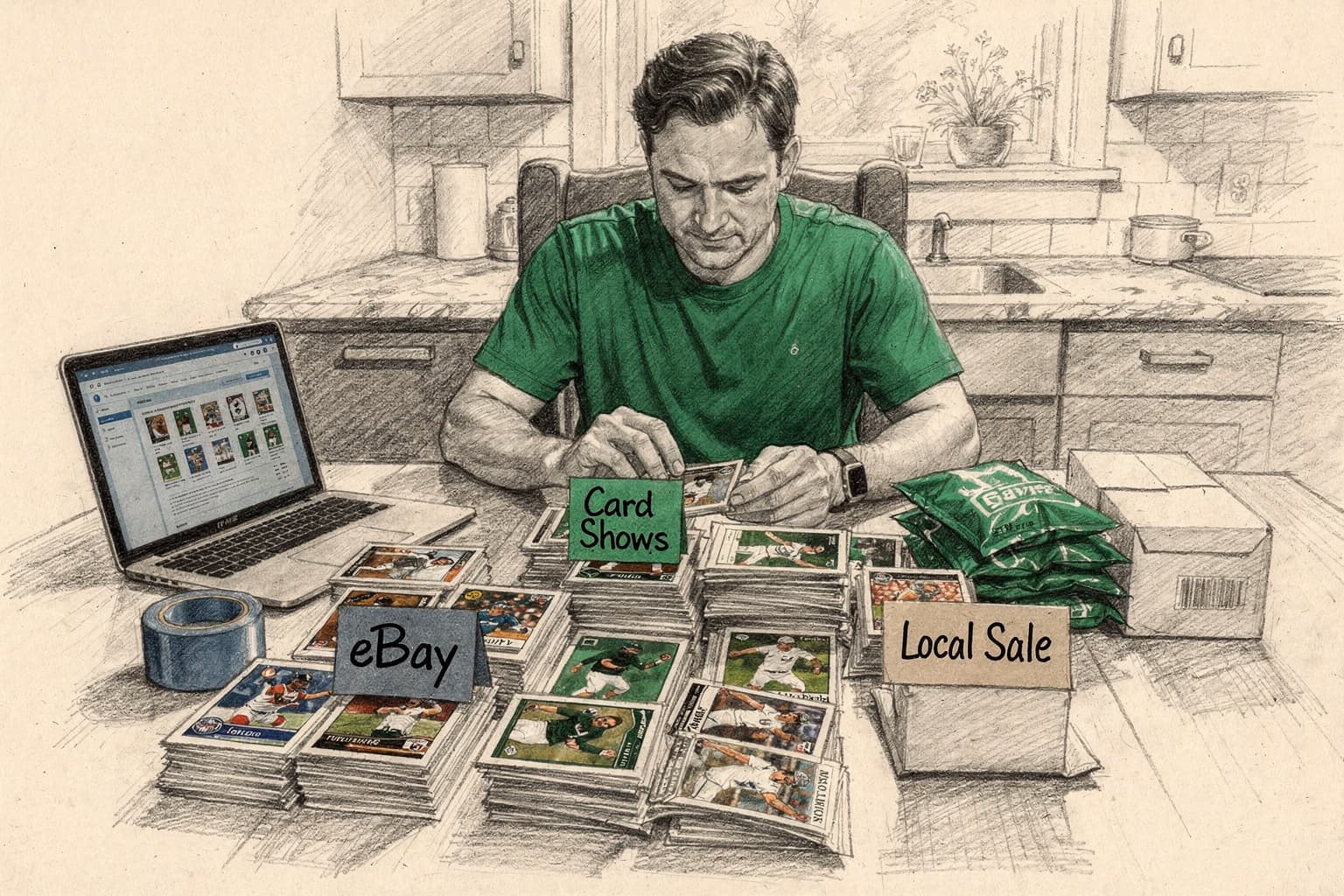
This question comes up constantly: "I have a collection. How do I sell it?" Maybe you inherited cards from a family member. Maybe you're downsizing. Maybe you just need the cash.
The answer depends on how much time you're willing to invest, how much value you have, and how fast you need the money. Here's the honest breakdown.
The Two Fundamental Approaches
Every selling decision comes down to a trade-off between time and money.
Sell individually: more work, more money. You list each card separately on eBay or similar platforms and wait for buyers. You'll get closer to full market value, but you're now running a small business: photographing, listing, shipping, handling returns.
Sell in bulk: less work, less money. You find a buyer who takes everything (or a large lot) at once. You'll get 40–60% of total value at best, but you're done in one transaction.
Most people end up doing a hybrid approach: pull out the high-value cards and sell those individually, then move the rest in bulk. This is typically the best balance of return and effort.
Option 1: eBay (Best for Cards Worth $10+)
eBay is still the largest marketplace for sports cards. For cards worth $10 or more, listing individually on eBay will get you the highest return.
What to know:
- eBay charges approximately 13% in fees (final value fee + payment processing)
- Use eBay's "Sold Items" filter or 130point.com to price your cards accurately
- Auction format works well for cards where you're unsure of exact market value
- Buy It Now with Best Offer works well when you know the price
- Good photos matter, a lighted background and clear images of front and back increase sell-through
The catch: Listing 500 cards individually on eBay takes significant time, photographing, measuring shipping, answering buyer questions, and handling the occasional return. For a large collection, this can take weeks or months of consistent effort.
Option 2: Consignment (Best for Large Collections You Don't Want to Manage)
A consigner sells your cards for you and takes a percentage, typically 15–30% depending on the service and card values.
Popular consignment options include online platforms like COMC (Check Out My Cards), eBay consignment sellers with large followings, and local dealers who sell at shows or through their own channels.
What to know:
- COMC charges a per-card processing fee (around $0.65 per card for insertion) on top of their sales commission, so it only makes economic sense for cards worth $2–3 or more
- eBay consigners typically handle everything, photography, listing, shipping, but their commission reflects that
- Turnaround varies, some cards sell quickly, others sit for months
- Ask about return policies for unsold cards before sending anything
Best for: Someone with a large collection of mid-value cards who doesn't have time to sell individually but wants more than bulk pricing.
Option 3: Facebook Marketplace and Local Sales (Best for Bulk Lots)
Facebook Marketplace is surprisingly effective for moving large lots of cards. The buying audience is different from eBay, these are local collectors who want a deal and are willing to meet up.
What to know:
- No selling fees (unlike eBay's 13%)
- You'll get lower prices but keep more of the sale
- Safety first, meet in public places, preferably ones with cameras (police station lobbies are common meeting spots)
- Be prepared for no-shows and lowball offers, it's the nature of the platform
- Price higher than your floor to leave room for negotiation
Craigslist and OfferUp work similarly, but Facebook Marketplace has the largest audience for most areas.
Option 4: Local Card Shops (Fast but Low Return)
Walking into a local card shop with a collection is the fastest way to convert cards to cash. It's also typically the lowest return.
What to know:
- Shops need to buy at a discount to make a profit when they resell, expect 40–50% of market value
- Most shops are primarily interested in your valuable cards and may pass on bulk entirely
- Some shops will take everything as a lot but at a steep discount
- A good relationship with a shop owner can lead to better offers over time
- Get multiple offers, prices vary significantly between shops
Best for: Someone who needs fast cash, has a relatively small collection, or wants zero hassle.
Option 5: Card Shows (Good for Mid-Range Collections)
Setting up as a seller at a local card show or walking the floor with cards to sell can work well, especially for collections with recognizable value.
What to know:
- Table fees at shows typically range from $50–$200 depending on the show size
- You can also walk the show offering cards to dealers, no table fee required
- Dealers at shows are often more willing to negotiate late in the day when they don't want to pack up
- Bundling cards together and offering a lot price usually gets better reception than one card at a time
- Know your comps before you walk in, checking eBay sold items during the show signals inexperience
Best for: Someone with 50–200 cards in the $5–$100 range who enjoys the show experience and wants to maximize return without eBay's overhead.
Option 6: Whatnot and Live Auctions (Good Volume, Good Energy)
Live auction platforms like Whatnot have grown rapidly. If you have volume and some knowledge of how to present cards, live selling can move a lot of inventory fast.
What to know:
- Platform fees apply (Whatnot charges around 8% + payment processing)
- You need a following or need to build one, cold-start sellers struggle
- Cards often sell below market value in live auctions due to the auction psychology
- Great for moving mid-range and bulk inventory quickly
The Hybrid Strategy (What Actually Works)
For most collections, the right approach is:
-
Sort everything first. Separate into tiers: high value ($50+), mid value ($10–$50), low value ($1–$10), and bulk/commons (under $1).
-
Sell high-value cards individually on eBay. These justify the time investment per card. Use sold comps, take good photos, and price accurately.
-
Consider consignment for mid-value cards. If you have 100+ cards in the $5–$50 range, a consigner saves you enormous time for a reasonable fee.
-
Move low-value cards and bulk locally. Facebook Marketplace lots, card show bargain boxes, or local shop bulk deals. Don't spend an hour listing a $3 card on eBay.
-
Accept that commons may have near-zero value. Junk wax era base cards, damaged cards, and commons from overproduced sets are worth pennies per card in bulk, sometimes less than the shipping cost to move them.
The Inventory Step Nobody Wants to Do
Before selling anything, document what you have. You don't need a card-by-card inventory for bulk, but you should know:
- Approximate total card count
- Which sports and eras are represented
- Any high-value cards you've identified
- What percentage is graded vs. raw
This inventory serves two purposes: it helps you price the collection accurately, and it protects you in negotiations. A buyer offering $500 for "a bunch of cards" is different from a buyer offering $500 for a documented lot with specific contents.
How Slabfy Helps
Slabfy's inventory system lets you scan and catalog cards with live market comps, so you know what you're sitting on before you sell. The grade ladder shows grading ROI for cards you might submit before selling. And Price Check works both directions, if you're trying to evaluate whether an offer is fair, the data is there.
The difference between leaving money on the table and getting a fair deal is almost always information. Know what you have, know what it's worth, and sell through the channel that matches your time and effort budget.
Slabfy is live. Monthly Collector and Collector Plus are free for 14 days. Start here.