The Hobby Built the Data. So Why Doesn't It Own It?
The Slabfy waitlist is live. Join, invite three people, and you're in. Here's why I built the referral gate and the bigger idea behind it.
To everyone who's been sitting on that list: appreciate you. Real talk.
And if you were on the waitlist before the referral launch, you're already good. You don't have to do anything. I'm sending invites out in batches, somewhere around 20 to 50 a day, until I've worked through the entire list. Yours is coming. If it already landed in your inbox, that wasn't a mass blast, you were one of the early ones.
Just know you're early. Stuff is going to break. When it does, hit the bug button in the app or message me directly and I'll get on it.
The waitlist is live. Here's how you get in:
You join. You invite three people. You're in. 🔑
No lottery. No random draw. No fake countdown timer designed to make you panic.
I know a referral gate makes some of you roll your eyes, and I'm going to explain exactly why it works that way. But that explanation only makes sense if I start somewhere else.
It starts with a card I lost when I was 13.
🏀 The Kobe
I lost my Kobe Bryant rookie card when I was 13 years old.
If you've lost one, you know it isn't really about the card. I can still tell you where I was and how it felt. It's the kind of thing that just sits there for twenty years.
Then life did what life does. I stopped collecting. Not a decision, exactly, more like a slow fade. Film school, dead-end jobs, sales floors, long days. I went and built a whole career designing software. Websites first, then apps, then full platforms. Cards stayed in the past where I left them.
Then Caitlin Clark happened.
And just like that, I was back. Once I was back, I was back.
Which is how I ended up at the biggest card show in Pasadena, telling myself I was not leaving without a Kobe rookie. I went vendor to vendor. Nothing. Bought a $5 Sky Box just to make the pain go away.
Then I found it. Not one. Two PSA 9s.
Thirteen-year-old me could finally rest. I filmed the whole thing and it kind of blew up, which for a card nerd with a phone camera was a lot. If you want the long version, it's in my honest take as a product designer.
So I did what you'd expect. I started going to every show I could find.
And that's when I started noticing something that ruined it a little.
🔍 I thought the hard part would be the code
It wasn't. Not even close.
The hard part is that in this hobby, the data doesn't belong to the hobby.
Every comp. Every sale. Every population report. Every price history. All of it made by us, by regular people buying and selling and grading and trading with each other. And all of it sitting behind somebody else's login. Owned by companies. Priced by companies. Gated by companies.
The culture creates the data, and then rents it back.
I'm a builder, so my instinct was to go fix it. Writing the software turned out to be the easy half. I learned more about how this industry is actually wired in one year than I did in a decade of designing software.
And somewhere in there I looked up and realized the data was the small part.
🔒 It's bigger than data
Here's something I didn't really understand until I was deep in it.
Look at the stack for a second. Somebody licenses the right to print the cards. Somebody grades them. Somebody runs the marketplace where they sell. Somebody keeps the record of what they sold for.
Four different jobs. They used to be four different businesses.
Over the last few years, all four have been pulling together. Licensing, manufacturing, marketplaces, live selling, events, grading. Fewer companies doing more of it.
And honestly? A lot of that has been good for us. The hobby got more professional, more liquid, and a lot more legitimate because serious operators came in and invested real money. Some of what's been built is genuinely great, and I'd rather have it than not.
But it does change one thing quietly, and it's worth seeing clearly:
The fewer places all of this lives, the further the record drifts from the people who created it.
That's not a villain. It's just what maturing industries do. But it means the story of what we bought, sold, and traded gets written somewhere we don't have a key to.
Structure problems have structural answers. So I sat with it for a while, and eventually I landed on the one thing consolidation can't touch.
💎 The one thing that can't be consolidated
Nothing about that consolidation touches what happens between us.
Every deal at every table. Every trade in a group chat. Every "what'd you pay for that?" at 11pm. Every handshake at a show where two people looked at the same card and agreed on a number.
That's not their record. That's ours. It always was.
So the goal became simple to say and stupid hard to do: take it back, and hand it to the people it came from.
Which brings up the obvious question. Who am I to be the one doing that?
🛠️ What I am, and what I'm not
Let me be straight with you.
I'm not the guy who can recite a 1987 checklist from memory or name every prospect in every sport. I don't know every sport. I follow them, I love them, but there are people in this hobby who forgot more about cards this morning than I'll ever know. I collected as a kid, I stepped away for a long time, and I came back.
What I'm actually good at is building applications. That's the one thing I've done my entire career. Websites, then apps, then full platforms for a living.
So my contribution isn't knowing more than you. It's building the thing you've been waiting for somebody to build.
And to be clear, Slabfy handles Pokémon too, priced right alongside sports. Cards are cards, and we already broke down the best Pokémon card apps. It's just not the corner I know best, and I'd rather tell you that than pretend.
Plenty of people have taken a run at this. It's a hard, expensive problem, which is exactly why it's still sitting there unsolved. But I make software for a living and I love this hobby, and that combination doesn't show up in this space very often.
So I put my head down for a year.
🏗️ What I actually built
Not another price checker. Not another inventory app. Those exist and they're fine, and they all solve one tenth of your day.
I wanted the whole loop in one place:
- Buying. Scan it, price it, get a real verdict before you hand over cash.
- Selling. List it, ship it, run your show table, take payments, keep the receipts.
- Culture. Your collection, your storefront, your profile, the people you trade with.
- Marketing. Because most of you are running a real business and nobody ever gave you the tools for it.
The way I picture it, this thing should feel alive. It learns from what's actually selling. It gets sharper every time somebody uses it. It's not a static database you go query, it's a living market that talks back.
And underneath all of it, the part I care about most:
You should be able to make a living doing this.
Wouldn't you rather make money doing the thing you already love than treat it as the side gig you squeeze in after work? That's the whole bet. Everybody transacts, everybody earns, everybody stays in love with the hobby instead of burning out on the admin.
But there's a reason I'm building it as a place and not just a tool. And it's the thing I noticed at those shows that I still can't unsee.
🤝 The thing I can't unsee
Go anywhere in America right now. Restaurant. Airport. Somebody's living room. Everybody's face is in a phone.
Then go to a card show.
Nobody's scrolling. They're holding a slab up to the light. Turning it. Squinting at a corner. Handing it to the guy next to them. Talking. Arguing about it. Yeah, phones come out to scan and check comps, obviously. But the thing itself is in their hands, and the person is right there in front of them, and they're both looking at the same piece of cardboard like it means something.
That's rare in 2026. That's worth protecting.
Because this is a real object. A 9 year old and a 60 year old can hold the same card and both care about it, for completely different reasons, at the same table. The '80s and '90s culture never died. It grew up, had kids, and dragged them along. That's why I think this is here to stay, and it's the bigger thesis I keep coming back to.
Which is exactly why I'm careful about where AI goes.
🤖 Where AI fits, and where it doesn't
I'm not building AI to replace the human part. I'm building it to delete the boring part.
Nobody got into this because they love data entry, reconciling spreadsheets, or pulling 40 comps by hand to price one card. That's the tax you pay to do the thing you love. AI should eat that tax so you get more time at the table, more time hunting, more time actually talking to people.
Bring people together, not further apart. That's the whole assignment.
Which finally brings me back to the three people.
🔑 So, about the three
Here's the honest math.
A thing like this is only as good as the network behind it. Prices get sharper when more real transactions run through it. Deals get better when there are more people on both sides. A marketplace with one person in it is just a spreadsheet with extra steps.
I could go buy that network. Run ads, dump money into a launch, wake up Monday with 10,000 email addresses and no idea who a single one of them is. That's how you get an impressive number and a dead product.
Or it gets built the way this hobby has always actually worked: somebody you trust tells you to check it out.
That's how you found your local card shop. That's how you found the guy who always has the good bargain box. That's how every deal at every show gets done. Somebody vouches for somebody.
So I'd rather have a few hundred people who genuinely know each other than 10,000 strangers.
And here's the part I keep thinking about: that group already exists. It's you and the people in your phone. It just hasn't been introduced to itself yet.
That's the whole reason for the three. It isn't a growth hack, it's the foundation. If we're serious about this hobby owning its own data, then the hobby has to be the one that builds it. Which means you.
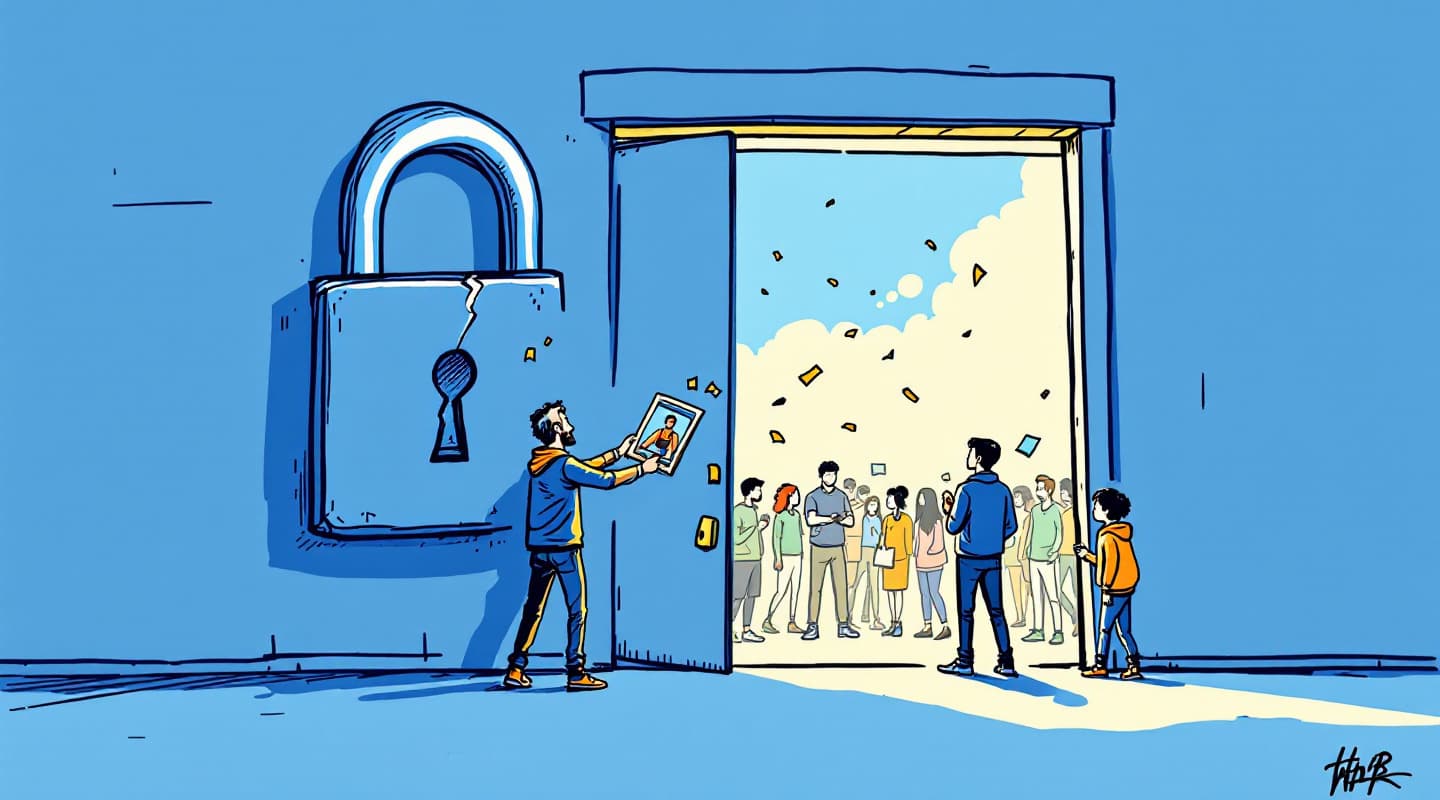
You're not on a list waiting on me. You've got the key in your hand.
🐛 Fair warning
Things are going to break.
There will be bugs. Some screens will be janky. Something is going to price weird at 2am and I'll be up fixing it. This is a beta and I'm not going to pretend otherwise.
But there's a bug button right in the app. Use it. I read every one. That feedback is the fastest path to this thing being great, and honestly it's the whole reason I'd rather ship it to you now than polish it alone in a cave for another six months.
👋 Come build it with me
If you want to help, I want to hear from you.
Dealers, breakers, show promoters, grading folks, content people, developers, or just someone with a loud opinion about what's broken. Message me. Partnerships, integrations, feedback, whatever it is, we'll figure something out.
This isn't a "we built it, come use it" thing.
It's a "we started it, come finish it" thing.
I lost a Kobe when I was 13. Somehow that turned into a year of my life building this. The hobby deserved it.
Join. Bring three. Let's go. 🚀
Peter