Card Show Setup Guide: Everything a Dealer Needs to Run a Profitable Table
The complete guide to setting up and running a card show table. From inventory prep to pricing strategy to tracking sales and P&L, everything dealers need to know.
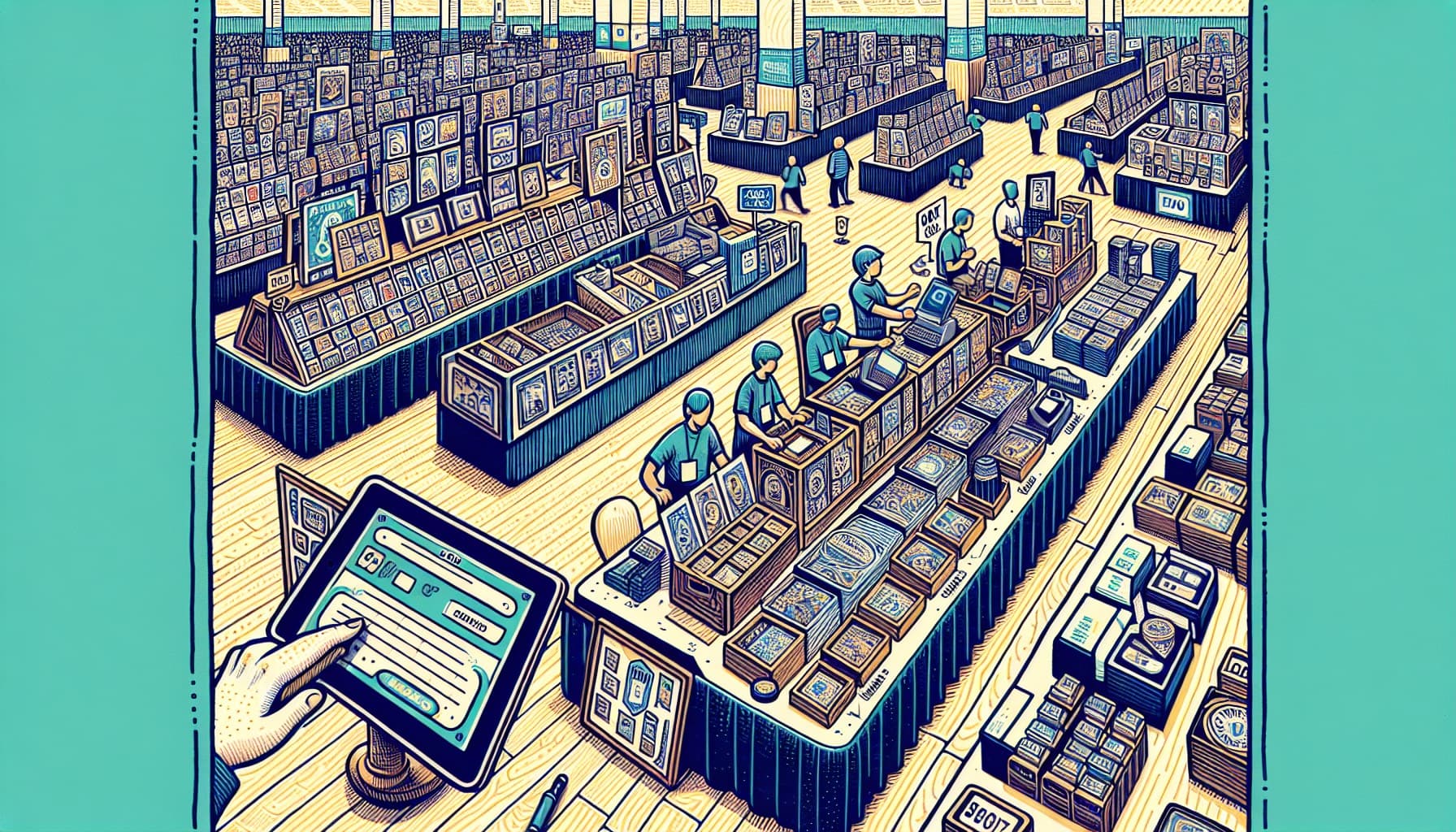
Running a card show table is one of the best ways to buy and sell sports cards, if you do it right. The margins are better than eBay (no 13.25% final value fee), the buying opportunities are constant (people walk up to your table with cards to sell all day), and you build relationships that turn into repeat business.
But "if you do it right" is doing a lot of heavy lifting in that sentence. Plenty of dealers show up with a pile of cards in a shoebox, no change, no way to accept Venmo, and no idea what they paid for half their inventory. They go home thinking they had a great day because they made a few hundred in sales, but they can't actually tell you if they profited.
This guide covers everything: what to do before the show, how to set up your table, how to price and buy cards on the floor, how to track sales in real time, and how to reconcile everything after you pack up.
Before the Show
The show starts days before you load the car. Preparation is the difference between a smooth, profitable day and a chaotic scramble.
Inventory Prep
Go through your inventory and decide what you're bringing. Not everything, just what makes sense for this specific show. A small local show with 20 tables calls for a different inventory mix than a 200-table regional show.
Price everything you plan to sell before you leave. Sticking prices on cards at the table wastes time and looks unprofessional. Use small price stickers or penny sleeve inserts with prices written in marker. For high-value slabs, a printed price label looks clean and signals that you're serious.
If you're using Slabfy, your inventory is already logged with cost basis and current market values. Pull up your collection, sort by what's priced to sell, and bring the cards where your margin is healthy.
Cash Float
Bring $200-300 in small bills. Fives, tens, and twenties. You'll need to make change from the first transaction. Nothing kills a sale faster than "I don't have change for a hundred" at 9 AM. Some dealers also bring a small coin bag for exact change, but most card show transactions round to the nearest dollar.
Payment Methods
This is non-negotiable: you need to accept more than just cash. If you're cash-only in 2026, you are leaving 20-30% of your sales on the table. Younger collectors especially carry almost no cash.
Set up the following before show day:
- Cash: still king at card shows, probably 50-60% of transactions
- Venmo: the most popular digital option at shows. Print your QR code.
- Zelle: some buyers prefer it. Make sure your bank supports instant transfers.
- PayPal: less common at shows but some buyers insist on it for purchase protection
- Cash App: regional preference, more popular in some areas than others
Print QR codes for every digital payment method you accept and display them at your table. A buyer should never have to ask "do you take Venmo?", they should see the QR code and just scan it.
Packing
Slabs go in slab boxes or wrapped in bubble wrap, sorted in an order that matches how you'll display them. Nothing worse than digging through a random pile of slabs while a customer waits. Raw cards go in penny sleeves and toploaders in a card box, organized by sport or player.
Bring more than you think you need. If you sell out early, you're leaving money on the table for the rest of the day.
Table Setup
Your table is your storefront. It should look like you do this for a living, even if you don't.
Display Layout
Put your best cards front and center, angled toward the aisle so people walking by can see them. Use slab stands or risers to create height, a flat table where everything is lying down is hard to browse. Tiered displays let people scan your inventory without picking up every card.
Organize by sport, then by price tier. Keep your high-value slabs ($100+) in a separate area, ideally behind you or in a display case. Accessible enough to show, secure enough that nobody walks off with a $500 card.
Signage
At minimum, have a sign with your name or business name. A banner behind your table is even better. Include your social media handles and your online storefront URL.
Slabfy generates a QR code for your online storefront. Print it big and put it on a small stand at the front of your table. Customers who don't buy at the show can scan it and buy from you later. Every show should generate follow-up sales, the QR code makes that happen.
Lighting
If the venue has mediocre overhead lighting (most do), bring a small battery-powered LED light or a clip-on desk lamp. Good lighting makes cards look better and draws eyes to your table. This is a small thing that most dealers skip, and it makes a real difference.
Pricing Strategy at the Table
Pricing is where a lot of dealers either leave money on the table or price themselves out of sales. You need a system.
Know Your Comps
Every card on your table should be priced based on recent eBay sold comps, not what the card is listed for, but what it actually sold for in the last 30 days. The Price Check feature pulls live comps so you're working with real data, not memory or gut feeling.
Show Pricing vs. eBay Pricing
Most savvy buyers expect a small discount at shows compared to eBay, because you're saving on eBay fees and shipping. A fair show price is typically 85-95% of recent eBay sold comps. If a card sells for $100 on eBay, pricing it at $85-95 at a show is competitive and still gives you a better margin than an eBay sale after fees.
If you're patient and don't need to move cards quickly, you can price at 100% of comps or slightly above. Just know that fewer cards will sell and you'll do more negotiating.
Be Ready to Negotiate
Card shows are a negotiation environment. Most buyers will ask for a deal, especially if they're buying multiple cards. Decide your floor price for each card before the show. Know the lowest you'll go. That way you can negotiate confidently without accidentally selling below your cost basis.
Consignment Cards
If you're selling cards on consignment for other people, track those separately. You need to know which cards are yours and which belong to someone else, what the agreed split is, and what actually sold. The Card Show POS lets you tag cards as consignment and tracks the split automatically.
Buying at Shows
Selling is only half the business at a card show. The other half, and often the more profitable half, is buying.
Throughout the day, people will walk up to your table with cards to sell. Maybe it's a collector trimming their collection, maybe it's someone who inherited a bunch of cards, or maybe it's another dealer looking to move inventory. Your job is to evaluate fast and make fair offers.
The Speed Problem
The old way: someone puts a card in front of you, you pull out your phone, search eBay, scroll through sold comps, mentally calculate fees... and five minutes later you make an offer. Do that for 50 cards and you've burned four hours of your show day just evaluating.
The Price Check feature changes the math. Scan or search, get instant comps and a BUY or PASS verdict based on your margin thresholds. Dealers using it evaluate 200+ cards per show instead of spending 3-5 minutes per card on eBay. That speed means you see more inventory, make more offers, and close more deals.
What to Pay
Standard buy prices at shows are 50-70% of eBay sold comps, depending on the card's liquidity and your confidence in reselling it. High-demand cards (top rookies, hall of famers) command 65-70%. Obscure cards or cards with questionable demand, more like 40-50%.
Never buy a card without knowing your cost to resell. If you're buying raw cards to grade, factor in grading fees and the risk of a low grade. If you're buying slabs to resell on eBay, factor in fees and shipping. The Grading Calculator handles both scenarios.
Tracking Sales During the Show
Do not use a notepad. Do not rely on your memory. Do not plan to "figure it out later." Track every transaction as it happens.
Here's what you need to record for each sale:
- What card sold
- Sale price
- Payment method (cash, Venmo, Zelle, etc.)
- Whether it was your card or consignment
- Cost basis (what you paid for it)
The Card Show POS is built specifically for this. It tracks every sale in real time, cash and digital, and calculates your running P&L throughout the day, including your table fee. You can see at any point during the show exactly where you stand: total revenue, total cost of goods, gross profit, and net profit after table fees.
The payment method tracking matters more than you think. At the end of the show, you need to reconcile your cash with your digital payments. If you took in $800 cash and $400 in Venmo, but you also bought $300 in cards with cash, you should have $500 in your cash box. If you don't, something went wrong. Real-time tracking prevents that confusion.
After the Show
The show isn't over when you pack up the car. The post-show work is what separates hobbyists from dealers.
Reconcile Inventory
Go through everything you brought and check it against your sales log. Confirm what sold, what didn't, and whether anything is missing. If you use a digital inventory system, mark sold items immediately so your online listings stay accurate. Nothing frustrates a buyer more than purchasing a card online that you already sold at a show.
Calculate Real Profit
Your profit is not just "how much cash you have now." It's:
Revenue (total sales) minus Cost of Goods Sold (what you paid for the cards you sold) minus Table Fee minus Travel Costs (gas, tolls, hotel if overnight) = Actual Profit
If you bought cards at the show, those are inventory acquisitions, not expenses, they'll become cost of goods when you sell them later. Don't mix up buying inventory with losing money.
Show Wrapped
Slabfy's Show Wrapped feature gives you a Spotify-style recap of your show day: total revenue, total profit, biggest sale, most popular player, payment method breakdown, and more. It's a satisfying way to close out a show and it gives you data you can use to plan for the next one.
Did most of your sales come from basketball? Bring more basketball next time. Did 40% of your revenue come through Venmo? Make sure that QR code is even more prominent. The data tells you what's working.
Follow Up
If you collected any contact information during the show, business cards, Instagram handles, phone numbers, follow up within 48 hours. A quick message like "good meeting you at the show, here's my online store if you want to browse" keeps the relationship alive and can generate sales for weeks after the show.
Common Mistakes
Not bringing enough change. You will lose sales if you can't break a $50 or a $100 bill in the first hour. Bring $200-300 in small bills. Every time.
Not accepting digital payments. Cash-only dealers in 2026 are leaving serious money behind. Venmo takes 30 seconds to set up. Do it.
Not tracking cost basis. If you don't know what you paid for a card, you don't know if you profited when you sell it. This is basic accounting and most hobby dealers skip it completely. Track your cost basis for every card you own.
Overpricing. If people keep picking up your cards, looking at the price, and putting them back down, your prices are too high. Watch the body language at your table. If you're getting lots of looks but no sales, adjust your pricing. A card that sits in your inventory for six months isn't an asset, it's dead capital.
Ignoring the buy side. Some dealers are so focused on selling that they pass on buying opportunities all day. The best show dealers are always buying. Every card someone brings to your table is a potential flip.
The Bottom Line
The dealers who consistently make money at shows have a system. They prep their inventory in advance. They price based on real data, not vibes. They accept every reasonable payment method. They track every sale as it happens. And they know their exact profit when they drive home.
That's what a card-specific POS is for. Not a generic Square terminal, not a notes app, not a spiral notebook, a tool built for how card shows actually work, with comps, cost basis, consignment tracking, and live P&L built in.
The card show circuit is one of the best businesses in the hobby. Treat it like one.
Run your next show with Slabfy Card Show POS, included with Pro. See plans.