How to Sell at Card Shows: The Complete Dealer's Guide (2026)
Everything you need to know about selling sports cards at card shows, table setup, pricing strategy, what to bring, how to handle negotiations, and tools that keep you from leaving money on the table.
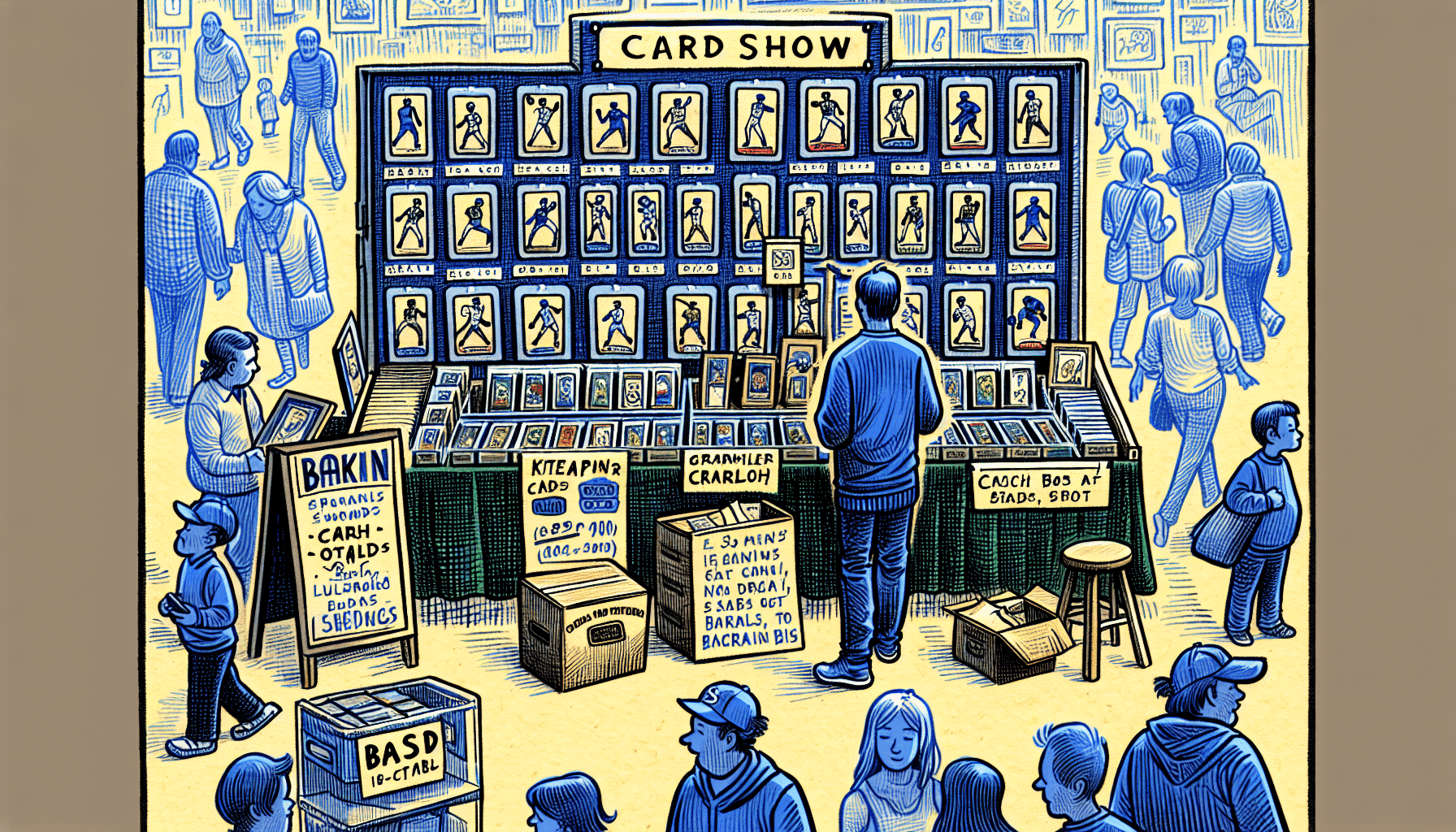
Card shows are still the best place to move inventory, build relationships, and make deals that don't happen online. But the dealers who consistently profit from shows aren't just showing up with a box of cards and hoping for the best. They have a system.
Here's the complete breakdown, from prep to setup to closing deals, based on what actually works at shows in 2026.
Before the Show
Know Your Inventory
The biggest mistake new show dealers make is not knowing what they have. You should be able to answer these questions for every card at your table:
- What did I pay for it?
- What's the current market value?
- What's my floor price?
- How long have I been holding it?
If you can't answer those questions, you're negotiating blind. Dealers who track their inventory with live market data consistently get better margins because they know exactly where their floor is.
Price Everything in Advance
Pricing cards at the show wastes time and signals to buyers that you don't know your numbers. Price everything before you leave the house.
How to price for shows:
- Check eBay sold comps within the last 30 days
- Price 10–15% below the lowest eBay sold price, buyers expect a show discount, and you're saving 13% in eBay fees
- Round to clean numbers ($25, $50, $75), it makes negotiation easier
- Mark prices clearly on penny sleeves, toploaders, or table cards
What to Bring
Essential:
- Penny sleeves, toploaders, and team bags for packaging sales
- Cash and small bills for making change
- Square, Stripe, or a card reader for accepting credit/debit
- Phone charger (you'll be looking up comps all day)
- Business cards or QR codes to your online inventory
- Display cases for high-value cards
- A tablecloth (looks more professional than bare table)
Often forgotten:
- Price stickers or labels
- Rubber bands and dividers for organizing by sport/team/price tier
- Snacks and water, you're there for 6–8 hours
- A way to track sales as they happen (not "I'll figure it out later")
Table Setup That Actually Sells
The Layout
Your table should be browsable without asking questions. Buyers at shows want to flip through inventory quickly. The dealers who sell the most make it easy:
Front of table: Bargain boxes ($1–$5 cards). These draw people in and start conversations. Put them in labeled rows by sport or team.
Middle: Mid-value cards ($10–$50) in toploaders, organized by sport. Clear price labels visible without picking up each card.
Back/display cases: High-value slabs and hits ($50+). These face outward so passersby can see them from the aisle. Use risers to create height, flat tables are invisible from 10 feet away.
Signage: A clear sign with your name, what you specialize in, and whether you're buying. "BUYING CARDS, TOP DOLLAR" on a sign brings sellers to you all day.
The QR Code Advantage
This is the move most show dealers still aren't making: put a QR code on your table that links to your full online inventory. Buyers who see your table but don't buy right then can browse later and order from you.
This turns a 6-hour show into ongoing sales. Slabfy's QR-code storefront lets buyers scan and see everything you have, not just what's on the table.
Pricing Strategy at the Show
The Show Discount
Buyers expect to pay less at shows than on eBay. That's fair, you're not paying 13% in fees, and they're not paying shipping. A 10–15% discount off eBay sold prices is standard.
But don't give away the discount for free. Use it as a negotiation tool:
"This is priced at $80. On eBay it's selling for $95–$100 shipped. I'm already giving you the show price."
This frames the discount as intentional, not desperate.
Bundle Deals
The best show dealers close bigger deals by bundling. When someone's interested in one card, offer a deal on two or three:
"That Jeter PSA 8 is $75. If you grab the Griffey too, I'll do both for $120."
Bundling moves more inventory per transaction and gives the buyer a story: "I got a deal."
Handling Lowballers
Every show has them. Someone picks up a $100 card and offers $40. Here's how to handle it without burning a relationship:
- Don't get offended. It's just an opening offer.
- Counter with your floor. "I can't do $40, but I could do $85 if you're serious."
- If they walk, let them. They'll often come back later in the day.
- Never chase. Chasing a buyer signals desperation and tanks your perceived value.
Buying at Shows
Some of the best deals at shows aren't sales, they're purchases. Dealers who buy well at shows and resell online or at other shows make consistent margins.
What to Look For
- Sellers who are packing up early (motivated to move inventory)
- Estate lots and "grandpa's collection" sellers (often underpriced)
- Raw cards that would grade well (the eye-test arbitrage)
- Cards priced based on old comps (market has moved up since they priced)
The Price Check Approach
The dealers who buy the most confidently at shows are the ones with instant data. When someone walks up with a card to sell, you need to know the current market value, the grade ladder ROI, and whether it's a buy, within 30 seconds.
Slabfy's Price Check was built specifically for this moment. Scan the slab, get live comps, see the grade ladder at every tier, and get a BUY/PASS verdict with the numbers behind it. No more pulling up eBay on your phone and hoping you're not missing something.
Tracking Sales in Real Time
Here's what separates professional show dealers from hobbyists: tracking everything as it happens.
At the end of a show, you should know:
- Total revenue
- Total profit (revenue minus cost basis)
- How many transactions
- Best-selling cards and price points
- Whether the show was worth the table fee
If you're scribbling on a notepad or "remembering" your sales, you're losing data. And without data, you can't decide which shows to do again and which ones aren't worth the drive.
Slabfy's Card Show POS records every sale in real time. Scan or select the card, confirm the price, done. At the end of the show, you have a full P&L, not a guess.
After the Show
Follow Up
If you collected business cards or contact info from potential buyers, follow up within 48 hours. A quick message, "Hey, I still have that Mahomes PSA 10 if you're interested", closes deals that didn't happen at the table.
Update Your Inventory
Remove sold cards from your online listings immediately. Nothing kills credibility faster than advertising cards you already sold.
Review the Numbers
Look at your P&L:
- Did you cover your table fee?
- What was your average sale price?
- What types of cards sold best?
- Were there cards you priced too high that nobody touched?
This data shapes your strategy for the next show. The dealers who review their numbers after every show get better at pricing, inventory selection, and table layout over time.
The Show Dealer's Checklist
Before your next show, run through this:
- Inventory priced with current market comps
- Cash and card reader ready
- Display cases packed with high-value cards facing out
- Bargain boxes organized by sport/team
- QR code to online storefront printed
- Phone charged with pricing tools ready
- Business cards for buyer follow-ups
- Sales tracking system ready (not a notepad)
- Buying budget set for deals you spot
- Table fee accounted for in your floor prices
The Edge
The dealers who consistently outperform at shows aren't just better at collecting, they're better at operating. They know their numbers, they price with data, they buy with confidence, and they track everything.
The hobby has always rewarded knowledge. Shows reward systems.
Slabfy's Card Show POS, Price Check, and QR-code storefronts are built for show dealers. Get access here.