Is This Junk Wax 2.0? What the Fanatics Monopoly Means for Your Cards
Fanatics now holds all three major sports card licenses and CNBC is calling it "Junk Wax 2.0." Here is what the monopoly and the K-shaped market actually mean for the cards you already own, and how to tell which ones still hold value.
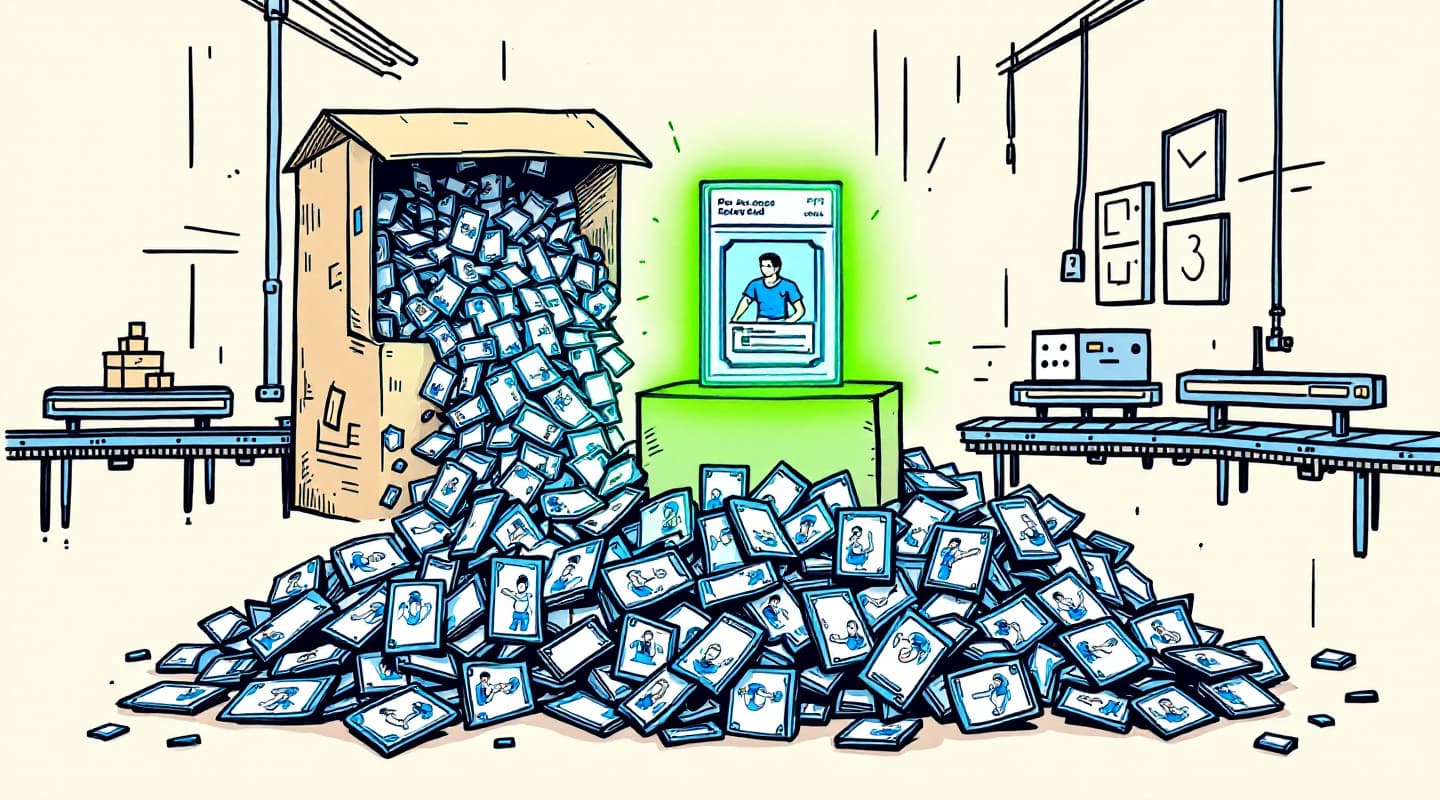
If you've spent any time in the hobby this spring, you've heard the phrase. "Junk Wax 2.0." It started in forum threads, jumped to card-show tables, and in late May the worry reached CNBC, which aired a segment on Fanatics cornering the collectibles market, telling a national audience that the sports card boom might be building the same oversupply cliff the hobby fell off of thirty years ago.
The trigger is simple to name. As of April 2026, Fanatics holds the exclusive trading card license for MLB, the NBA, and the NFL, all three at once. For the first time in the modern hobby, one company controls the card aisle end to end: manufacturing, live commerce, the marketplace, high-end auctions, vaulting, and grading integration. Panini, the company that used to share the stage, is in court alleging a monopoly while it runs out the clock on its remaining licensed products.
So is the sky falling? Not exactly. But the ground has shifted, and it changes how you should think about the cards already in your boxes. Let's separate the fear from the math.
What "Junk Wax 2.0" Actually Refers To
The original junk wax era ran from roughly 1987 to 1994. Manufacturers, watching card prices climb, did the rational thing for their own quarter: they printed more. And more. Print runs went from large to effectively unlimited, and a generation of collectors bought boxes believing they were buying appreciating assets. They weren't. Today a complete set from that era sells for a few dollars, because scarcity, the entire engine of card value, never existed.
The "2.0" worry is that we're doing it again with a modern coat of paint. The numbers give the argument teeth. Roughly 429 million NBA cards were produced in the most recent season. A single base card design now spawns something like 40 different refractor and parallel variations before you even count the base copies. Multiply that across every sport, every set, and every insert line and you get a firehose of cardboard that makes the '90s look quaint.
One company controlling all of it doesn't automatically mean more supply, but it removes the competitive tension that used to act as a check. When Topps and Panini were fighting for the same shelf, neither wanted to be the brand that flooded the market and torched resale value. That tension is gone now.
The Market Is Splitting in Two (And That's the Real Story)
Here's the part the "everything is junk" panic gets wrong. The 2026 market isn't crashing. It's bifurcating: economists would call it K-shaped, and it's the single most important thing to understand about your collection right now.
At the top, premium and blue-chip cards keep setting records. Rookie patch autos of generational players, low-numbered parallels of established stars, vintage in high grade, that tier is on fire, with individual cards crossing the million-dollar line. Scarcity plus a name that will still matter in twenty years equals a market that doesn't care about oversupply, because those cards were never part of the oversupply.
At the bottom, base and mid-tier cards face sustained, grinding pressure. The common rookie of a decent-but-not-transcendent player. The numbered-to-99 parallel that used to feel special and now competes with 39 other parallels of the same card. That's where the value is quietly leaking out.
Same hobby. Two completely different economies. The mistake collectors make is treating "sports cards" as one asset class that's either up or down. It isn't. Your collection almost certainly contains some of both, and knowing which cards sit on which side of the K is the whole game now. We wrote a bigger-picture take on this in why physical cards will be bigger than stocks; the short version is that the ceiling is real, but only for the right cards.
What This Means for the Cards You Already Own
You can't un-buy what's in your boxes, so the useful question isn't "is the market good or bad?" It's "which of my cards are on the strong side of the split, and which are dead weight?" Three practical moves:
1. Stop valuing your collection off the peaks. The million-dollar Jokic headlines have nothing to do with your $12 numbered rookie. Value each card off its own recent comps (actual completed sales for that exact card, grade, and parallel), not off vibes or the last hyped sale you saw. If you're guessing, you're almost always guessing high.
2. Identify your dead weight and move it while it still sells. In a K-shaped market, mid-tier cards don't crash overnight. They slowly become unsellable. The parallel you're "holding for later" may be worth less later and harder to move. If a card isn't a genuine blue-chip and isn't appreciating, the best exit is often now. Our guide to selling a collection without getting ripped off walks through how to do that cleanly.
3. Concentrate, don't sprawl. The junk wax lesson isn't "cards are bad." It's "quantity of cardboard is worthless; scarcity of the right cardboard is everything." Fewer, better cards beat a giant box of parallels every single time in a bifurcated market.
The Case That This Isn't 1990
It's worth steel-manning the other side, because the doom narrative is only half the picture.
Consolidation genuinely brings some real benefits. One operator means cleaner logistics, more consistent authentication, a unified supply chain, and stronger infrastructure for grading and marketplace liquidity, things a fragmented market did badly. The US trading card market is around $15 billion, an order of magnitude bigger and more liquid than the hobby of the '90s, with real-time pricing data, global demand, and instant marketplaces that simply didn't exist then.
And crucially: the junk wax era had no way to tell a valuable card from a worthless one at the moment of purchase. Everyone was flying blind. Today you can check completed comps, print-run context, grade-adjusted values, and liquidity before you spend a dollar. The oversupply is real, but so is the ability to route around it. The collectors who get hurt in a "Junk Wax 2.0" scenario are the ones buying blind. The ones who win are the ones treating every card like the priced asset it is.
The Bottom Line
Fanatics owning the whole aisle and the flood of parallels are real risks, and "Junk Wax 2.0" isn't pure hype. For base and mid-tier cardboard, it's already happening. But the headline hides the truth that matters: this is a K-shaped market, not a crashing one. Blue-chip scarcity is thriving. Generic supply is bleeding. Your collection lives on both sides of that line.
The move isn't to panic-sell or to bury your head. It's to know, card by card, exactly what you're holding: real value, real liquidity, and a clear BUY, SELL, or HOLD verdict. That's how you concentrate into the cards that survive the split and shed the ones that won't. That's exactly what Slabfy is built to do: real-time values from every marketplace, AI-backed verdicts on each card, and a portfolio view that shows you which side of the K your collection is really on.
Don't guess which of your cards are junk and which are gold. Monthly Collector and Collector Plus include a 14-day free trial.