What Card Liquidity Actually Means (And Why It Matters More Than Price in 2026)
A card's "value" is meaningless if you can't sell it. Here is what liquidity really is, why it's the deciding factor in a K-shaped market, and how to tell whether a card will actually sell before you buy or hold it.
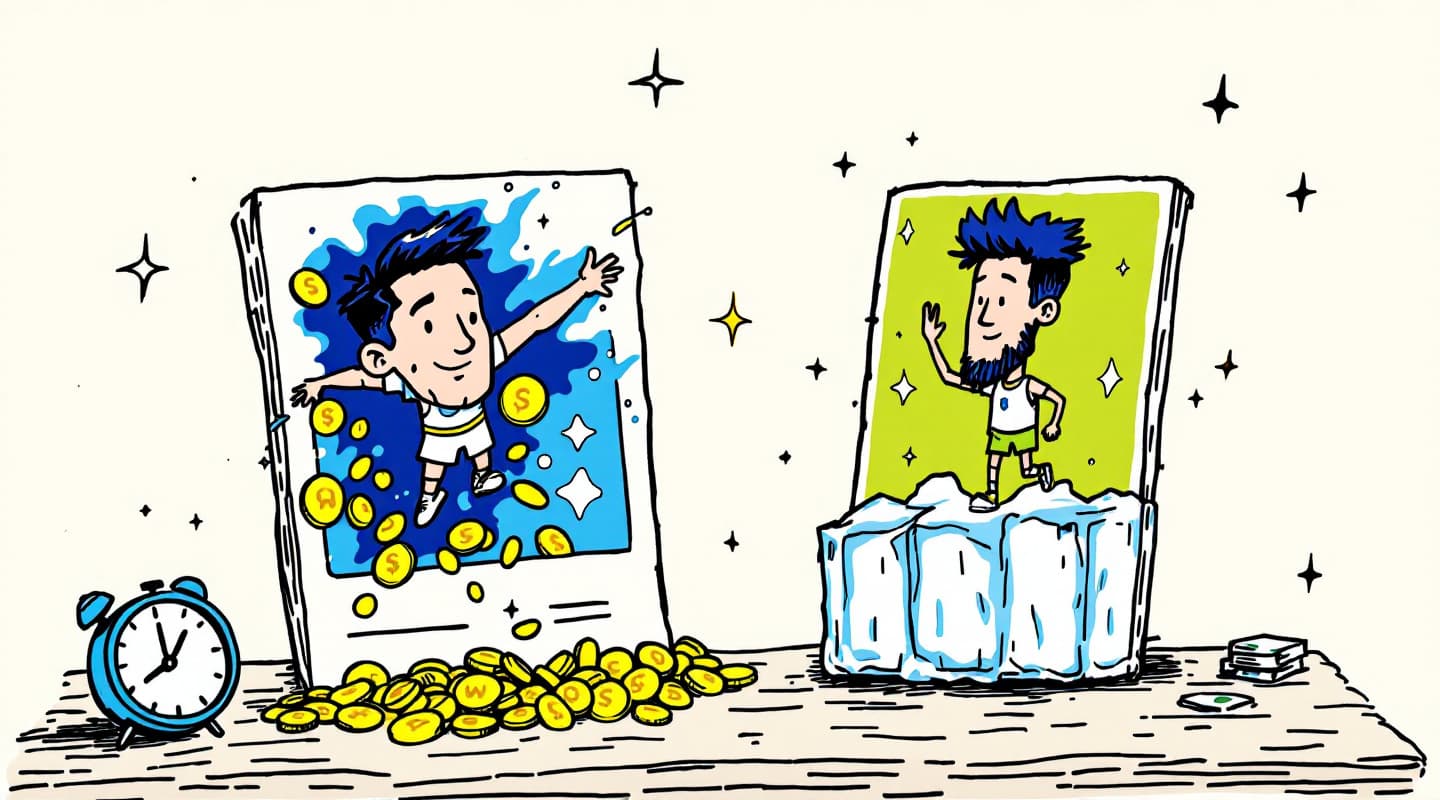
Ask a collector what a card is worth and they'll quote you a number. Ask them how fast they could turn that card into cash, and most go quiet. That gap, between what a card is "worth" and whether you can actually sell it, is the most underrated concept in the hobby, and in 2026 it's the one that separates collectors who make money from collectors who just accumulate cardboard.
The number matters. But the number is a promise, not a guarantee. Liquidity is whether the market keeps that promise.
Value vs. Liquidity: The Difference That Costs People Money
Value is what a card should sell for, usually pulled from recent completed sales of that exact card and grade. Liquidity is whether you can actually get that value, and how long it takes.
Picture two cards, both showing a "value" of $200:
- Card A sells three or four times a week. Real buyers, steady demand. You could list it tonight and have cash in a few days at or near $200.
- Card B last sold two months ago. Before that, three months before that. It "books" at $200 because someone, once, paid $200, but there's no active demand. To actually sell it you might wait weeks, drop the price to $150 to find the one buyer who wants it, or sit on it indefinitely.
Same value. Wildly different reality. Card A is liquid. Card B is a $200 number you can't spend. And here's the trap: on a portfolio spreadsheet, they look identical. Both say $200. The spreadsheet is lying to you about Card B.
This is why "how much is my card worth" is only half the question. The full question is how much is it worth and how fast can I realize that. A collection full of illiquid cards is a collection that's rich on paper and broke in practice.
Why Liquidity Is the Whole Game in 2026
Liquidity always mattered, but the K-shaped, Fanatics-era market has made it the deciding factor. Here's why.
When the market splits (blue-chips soaring while base and mid-tier cards sink), the pressure doesn't show up as a dramatic price crash. It shows up as evaporating liquidity. Mid-tier cards don't halve in value overnight. They just quietly stop selling. The bid disappears. The card that moved every week last year now sits for a month. Its "value" hasn't officially dropped yet, but you can no longer get it, which is the same thing as the value dropping, just with a delay.
So in a bifurcating market, liquidity is your early warning system. A card losing liquidity is a card losing value in slow motion. If you're watching only the price, you find out last, after the exit door has already narrowed. If you're watching liquidity, you find out first, while you can still sell into real demand.
The flood of parallels makes this worse. Forty variations of the same base card means demand for any single one is diluted. Scarcity of print is nice; scarcity plus demand is liquidity, and demand is the part collectors forget to check.
How to Read a Card's Liquidity Before You Commit
You don't need a finance degree. You need to look at four things, all of which live in a card's sales history:
1. Sales frequency. How many times has this exact card and grade sold in the last 30, 60, 90 days? Weekly sales = liquid. A couple sales a quarter = illiquid. One sale ever = a price, not a market.
2. Price consistency. Do those sales cluster tightly ($195, $205, $200) or scatter wildly ($120, $310, $175)? Tight clusters mean a real, agreed-upon market you can trust. Wide scatter means the "value" is basically a coin flip and you may not get anything near it.
3. Recency. A card that sold ten times last year but zero times in the last two months is a card whose market may have just walked out the door. Old comps are history, not a bid.
4. Depth. Is there a range of buyers, or is the whole "market" one obsessive collector who'll vanish the moment they're done? Thin, one-buyer markets collapse the instant that buyer is satisfied.
Run those four checks and you'll catch the difference between a $200 card you can spend and a $200 card that owns you.
What to Do With Illiquid Cards You Already Own
Most collections are full of them, so this isn't a scold. It's a plan.
- Sell your illiquid mid-tier cards while they still sell at all. The worst outcome is holding a slowly-drying card until the market for it disappears entirely. If it's not a genuine blue-chip and it's losing liquidity, the best price you'll ever get is usually today's. Our guide to selling a collection covers doing it without leaving money on the table.
- Concentrate into liquid cards. Fewer cards that sell fast beat a big pile that doesn't. Liquid cards give you optionality, the ability to raise cash whenever you need it, which is worth a real premium in an uncertain market.
- Bake liquidity into every buy going forward. Before you acquire anything, check whether you could exit it. A card you can't sell isn't an investment; it's a very expensive keepsake. If you're flipping, liquidity isn't optional. A flip you can't exit is a loss with extra steps.
The Bottom Line
Price tells you what a card is worth in theory. Liquidity tells you whether that theory survives contact with a real buyer. In 2026's split market, the second number is the one that decides whether your collection is an asset or a storage problem, because the cards under pressure don't announce it with a crash. They announce it by quietly refusing to sell.
Track both. Know not just what each card is worth, but how fast it would actually move, and you'll always know which cards are real money and which are just a number on a page. Slabfy shows you exactly that: real-time value and a liquidity read on every card, so your portfolio reflects what you can actually spend, not what a stale comp wishes it was worth.
Know which of your cards you could sell tomorrow, and which you couldn't. Monthly Collector and Collector Plus include a 14-day free trial.