Why I Think the Card Hobby Is Heading Toward Regulation
A few companies now print the supply, set the prices, and run the marketplaces for an asset class people treat like stocks. That combination doesn't stay unregulated forever. My theory on where the rules are coming from, and why that's a sign the hobby made it.
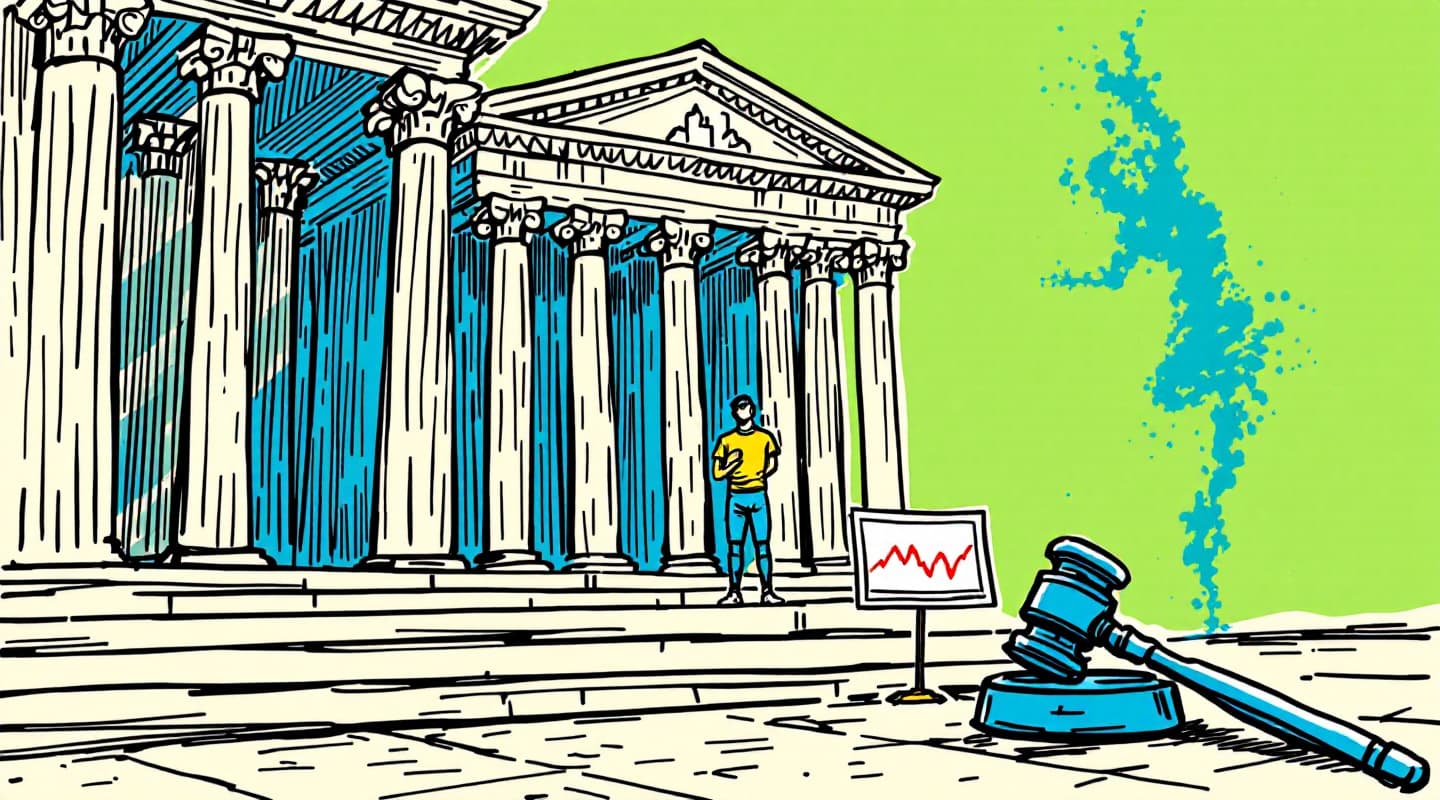
I'm going to make a prediction that most of the hobby doesn't want to hear: within the next decade, some meaningful part of the sports card world is going to get regulated. Not banned. Not killed. Regulated, the way we regulate things that move real money and that a lot of people can get hurt by.
I say this as someone who's all-in on cards. I'm Peter, I build Slabfy, and I've written before about why I think physical cards will be a bigger market than stocks for a lot of people. This isn't a doom post. If anything, regulation is the clearest signal that the thing you love has officially become serious money. Nobody regulates a toy. They regulate an asset class. And cards are quietly becoming one.
Here's why I think the rules are coming, and where from.
The Tell: Cards Stopped Being Toys and Became Assets
Walk through what the hobby actually looks like in 2026. There are real-time price indices tracking card values like tickers. There are vaults where you buy and sell without the card ever leaving a climate-controlled building; you're trading a claim on an object you never touch. There are platforms selling fractional shares of a single card, so a hundred people can each own a slice of one Jordan rookie. There's grading that turns a piece of cardboard into a serialized, authenticated, globally liquid unit.
Strip the athletes off the front and describe that system to a financial regulator cold. Standardized, authenticated units. Continuous pricing. Marketplaces with order books. Fractional ownership. Custody in third-party vaults. You just described a securities market. The only thing separating a graded slab in a vault from a share of stock is that we all agreed to call it a hobby.
That agreement is exactly the kind of thing regulators eventually stop honoring.
"Printing Money" Is Not a Metaphor Anymore
Here's the part that really moves the needle for me, and it's the thing you touched on: it's like printing money.
For most of the modern hobby, supply was split. Topps and Panini fought over the same shelf, and that competition acted as a natural brake: neither wanted to be the brand that flooded the market and torched everyone's resale value. That balance is gone. As I covered in the Junk Wax 2.0 piece, one company now holds the exclusive license for all three major U.S. sports at once. One company decides how many cards of an asset class exist.
Sit with that. A single private company gets to mint the supply of things that millions of people treat as investments. If a company could print the shares of a stock that you own, and decide next quarter to print ten times more, you'd call that a scandal, and there'd be a regulator whose entire job was to stop it. In cards, we call it a new product release.
I'm not saying anyone's doing anything illegal. I'm saying the structure (one issuer with unlimited discretion over the supply of an asset the public invests in) is precisely the structure that invites oversight. Panini is already in court alleging the whole thing is a monopoly. Once the fight is about market control rather than cardboard, you've left the hobby and entered antitrust territory, and government follows money and market power. Always.
The Four Doors Regulators Walk Through
When I game out how regulation actually arrives, I see four separate doors, and the hobby is standing in front of all of them at once.
Door 1: Securities
This is the one that's closest, because it's arguably already happening. The moment you sell fractional shares of a card to the public as an investment, you're brushing up against securities law. Some of those platforms already structure their offerings as regulated securities for exactly this reason. Scale that up, add indices and vaults and "buy a piece of this asset" marketing, and you have a financial product wearing a hobby costume. The SEC has a long history of looking at collectibles-as-investments and deciding the label doesn't matter. The economics do.
Door 2: Gambling
Open a pack and you're paying a fixed price for a randomized outcome with wildly different values inside. Watch a live break and you're literally buying a "spot" and hoping the case hit lands on you. Squint, and that's a lottery. Regulators in several places have already gone after loot boxes in video games using this exact logic. I love a good break, and I even wrote an honest breakdown of whether breaks are worth it, but I'd be lying if I said the mechanics don't look like gambling to an outsider with a rulebook. Manufacturers already print pack odds on the wrapper, and that didn't happen by accident. Disclosure like that is exactly what regulators tend to ask for once randomized-value products draw scrutiny.
Door 3: Antitrust
Covered above, but it's its own door. One licensor across every major sport is the textbook setup for an antitrust look, and there's already active litigation pointing right at it. Antitrust cases are slow, but they reshape entire industries when they land.
Door 4: Taxes and Money Laundering
The IRS already treats cards as collectibles, with their own capital-gains treatment, up to 28% on long-term gains, and after the 2025 tax law reset the federal 1099-K threshold back to $20,000 and 200 transactions, the reporting rules are a live, shifting target, and your profit is taxable whether or not a form ever shows up. I wrote the whole card tax guide because this door is already open. The one behind it is anti-money-laundering. Any market with six-figure items, anonymous cash deals across a show floor, and easy cross-border transfer eventually gets an AML framework. High-end art already did, first in the EU and UK, with the U.S. moving the same direction. A world of million-dollar slabs moving through vaults is a world regulators will want a paper trail on.
Why This Is Actually Bullish
If you're a collector, none of this should scare you. It should tell you the hobby won.
Regulation is what happens to markets that get big and serious enough to matter. Stocks, real estate, art, crypto: every one of them got the rules after it became an asset class people built wealth in, not before. The rules are a tax on legitimacy, and legitimacy is what pulls in the institutional money, the retirement dollars, the people who won't touch an asset until there's a floor of consumer protection under it.
The version of the hobby that gets regulated is the version that's worth trillions, not billions. I want that version. I just want to be ready for it.
What Smart Collectors Do Before the Rules Arrive
Here's the practical part, because prediction without action is just a podcast.
Every one of those four doors (securities, gambling, antitrust, taxes and AML) rewards the same behavior: treating your cards like the financial assets they're becoming, on paper, starting now. Documented cost basis. Real records of what you paid and what you sold. Provenance and authentication you can produce. Valuations grounded in actual comps, not vibes. The collectors who get caught out when the rules tighten will be the ones with a shoebox of cash receipts and no idea what they actually own or what it's worth. The ones who cruise through will already run their collection like a portfolio.
That's not a someday habit. It's the same habit that makes you money today, knowing real value, knowing what's liquid enough to actually sell, knowing your true profit when you move a card. Regulation just raises the price of not having done it.
This is genuinely why I built Slabfy the way I did. Every card carries a cost basis from the day you add it. Values are real-time and comp-backed. Sales, profit, and records build themselves in the background. I didn't design it as compliance software, I designed it as an operating system for people who take the hobby seriously. But the two turn out to be the same thing. The tools that make you sharper today are the exact tools that make you ready for a more regulated tomorrow.
The Bottom Line
A handful of companies now print the supply, run the marketplaces, and set the prices for an asset class the public invests in like stocks. That's not a stable equilibrium, it's the setup for regulation, coming through the securities door, the gambling door, the antitrust door, and the tax-and-AML door, probably all at different speeds.
I think it's coming. I think it's a good sign. And I think the only wrong move is to keep treating six-figure decisions like a shoebox hobby while the rest of the financial world starts treating your cards like the assets they already are.
Run your collection like it's already regulated, and you win either way, sharper now, ready later.
Treat your cards like real assets, starting today. Monthly Collector and Collector Plus include a 14-day free trial.