2026 Panini Prizm vs Donruss Road to World Cup: Which Soccer Cards Should You Buy?
Prizm World Cup is the flagship. Donruss Road to World Cup is the affordable entry point. Here's how the two 2026 World Cup products actually differ, where the value hides, and which one to buy depending on your budget and goal.
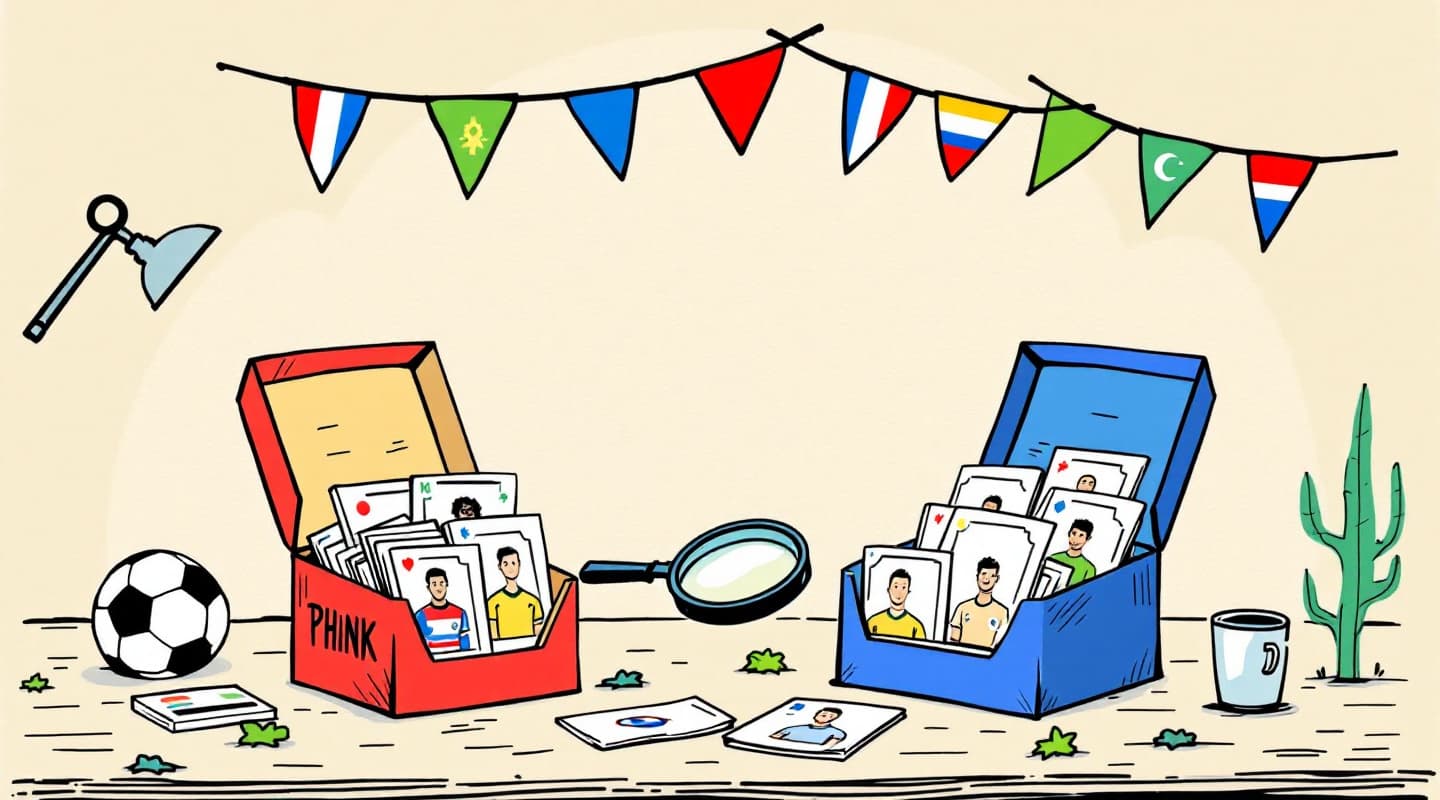
If you're buying into the 2026 World Cup as a collector, two Panini products are doing almost all the work: Prizm FIFA World Cup and Donruss Road to FIFA World Cup. They look similar on a shelf and they cover the same tournament, but they're built for different buyers, and picking the wrong one for your goal is how people overspend. Here's the honest breakdown.
The Two Products, Quickly
Donruss Road to FIFA World Cup was the earlier, more affordable release, the first product in Panini's Road to 2026 lineup. It runs a 250-card base set spanning 30 national teams, built around Rated Rookies (Panini's flagship rookie subset) plus inserts like Rookie Kings. Above it sit the premium tiers of the same "Road to" family, Select, Noir, and the high-end National Treasures. Think of Donruss as the entry point: cheap base, accessible boxes, real rookies, and a clear ladder up to scarcity if you want it.
Prizm FIFA World Cup is the flagship. It's a 500-card base covering all 48 qualified nations, and it's the set collectors treat as the "real" World Cup rookie card, the one the market remembers a player by in five years. Prizm's whole identity is its parallels: unnumbered colors like Silver, Hyper, and Pandora, plus numbered concepts including host-nation tributes (Old Glory for the US, Maple Leaf for Canada, Aguila for Mexico). Hobby boxes carry an autograph, several numbered Prizms, and a stack of inserts. Prizm is where the long-term, name-brand value lives.
The Real Difference That Matters
Forget the checklists for a second. The practical difference comes down to what you're actually buying it for:
- Prizm is a value and prestige play. Its parallels are the cards that hold and grow, its rookies are the ones graders and the market treat as canonical, and its ceiling is much higher. It's also more expensive to buy into, and the base is a commodity.
- Donruss is an access and volume play. Cheaper boxes, more cards per dollar, genuine Rated Rookies of the same stars, and a lower barrier if you just want to rip and chase names without spending Prizm money.
Neither is "better." A ripper on a budget who wants the fun of the pull is a Donruss buyer. Someone building a long-term position in the tournament's breakout stars is a Prizm buyer. Most serious collectors end up touching both.
Where the Value Actually Hides (In Both)
Here's the part that matters more than the product name: in either set, the base card is a commodity and the money lives in the versions most people can't identify. This is playing out live with the tournament's breakout names right now.
Take the 2026 Prizm base rookie of Mexico's Gilberto Mora. Collectors have flagged the plain base trading around $15, while the short-print base variation of the same card number draws comps near $125, roughly eight times the money for a card that looks almost identical. Sellers who can't tell them apart routinely dump the variation for the price of a common. That gap is the edge, and it exists in both Prizm and Donruss, on every hyped name.
So the buying lesson across both products is the same three things:
- Base is filler unless it's a rookie of someone who pops. Don't pay up for commons.
- Numbered parallels, autos, and photo variations are where scarcity lives. Learn to identify them, that skill is the actual money-maker.
- Grading multiplies the good stuff, not the base. A clean graded copy of the right parallel is where patient money goes, run the grade ladder math before you send anything in.
How to Decide (Budget-First)
- Under ~$50 and you just want to rip: Donruss Road to World Cup blasters/boxes. Best fun-per-dollar, real rookies, low downside.
- Building a position in specific stars: Prizm singles, not boxes. Buy the exact rookie/parallel you want off the secondary market instead of gambling on a box hitting it. This is almost always the better economics, we break down the buy-low mechanics in the arbitrage guide.
- Chasing scarcity/high-end: Prizm numbered parallels and the premium Road to tiers (Noir, National Treasures). Know the print run before you buy.
- Flipping: whichever product has the widest gap between what commons cost and what mispriced variations/parallels are closing at. That gap moves, so track comps, don't guess. For the raw-to-graded side of that gap, Flip Finder shows which grades pay after fees.
Bottom Line
Donruss Road to World Cup is the affordable on-ramp; Prizm FIFA World Cup is the flagship where long-term value and canonical rookies live. But the product on the box matters less than the discipline you bring to it: in both sets, base is a commodity and the real money is in the numbered parallels, autos, and photo variations most buyers can't identify. Nail that skill and it doesn't matter which pack you're ripping, you'll know a $125 card from a $15 one on sight.
If you'd rather have the economics done for you, buy price → grading cost → profit after fees → ROI at every grade, that's the entire point of Flip Finder, and the grade ladder lets you run your own numbers. Buy the World Cup on data, not vibes.